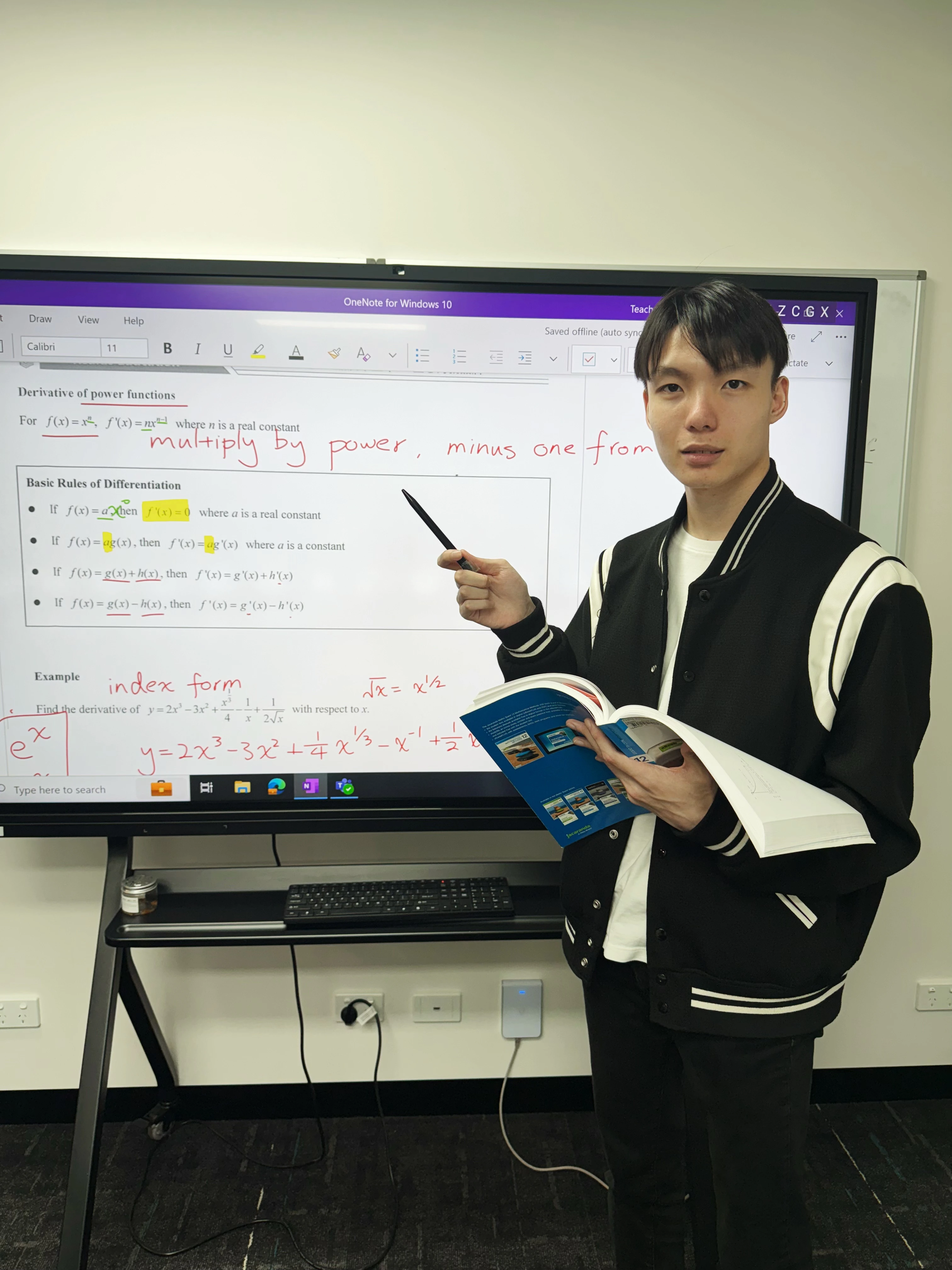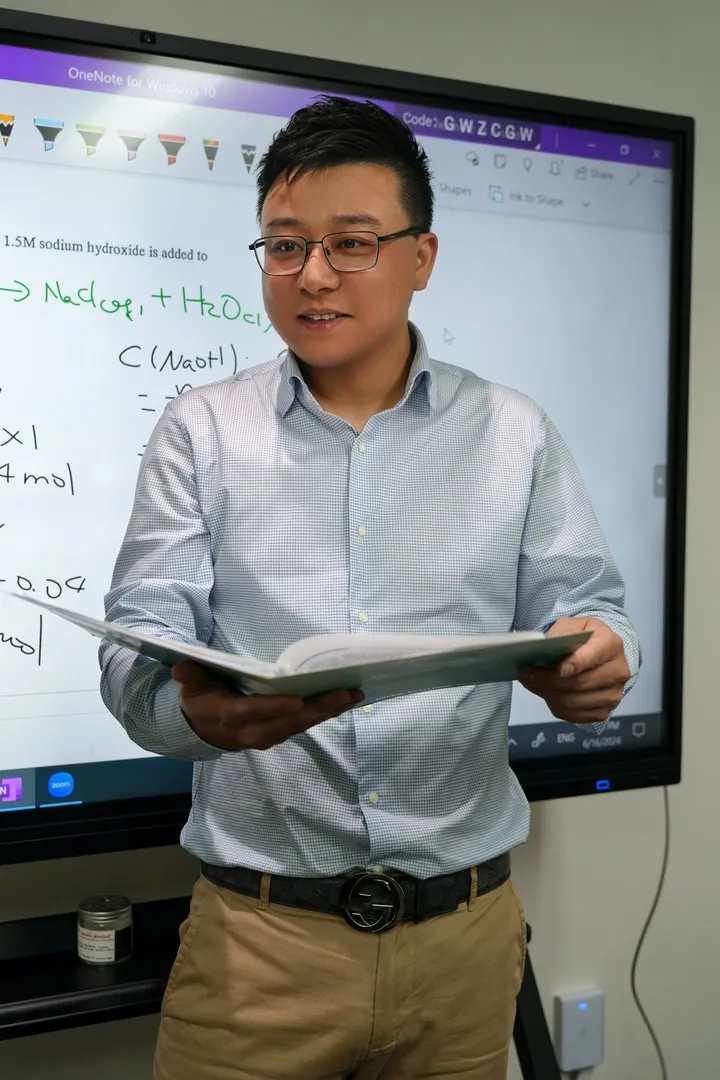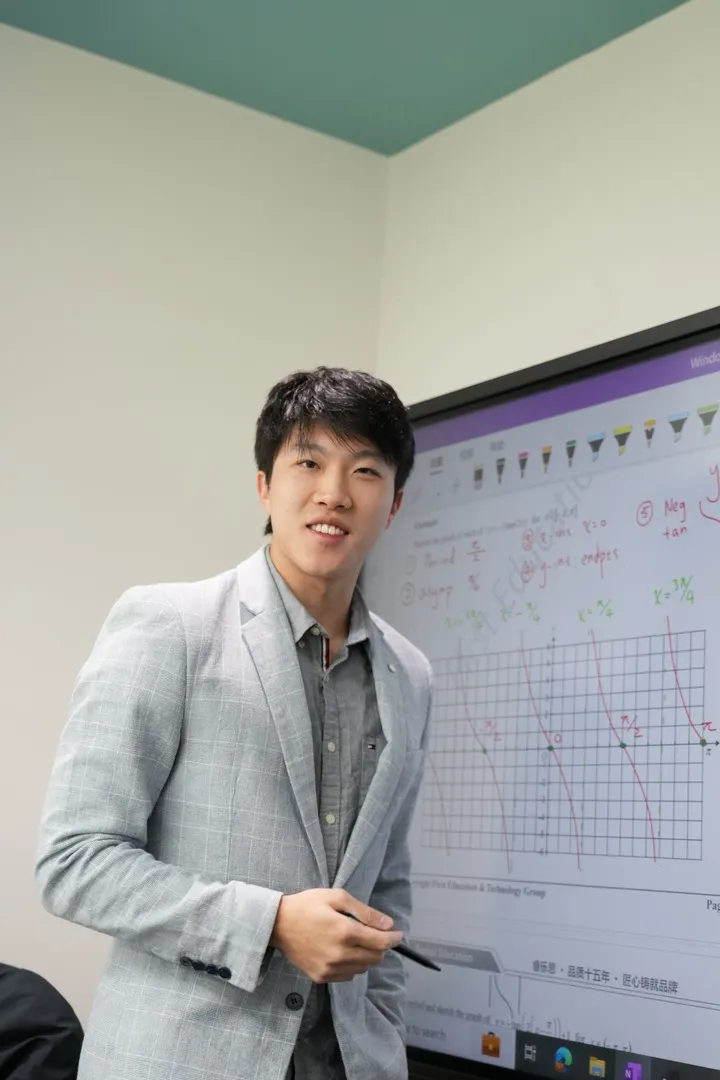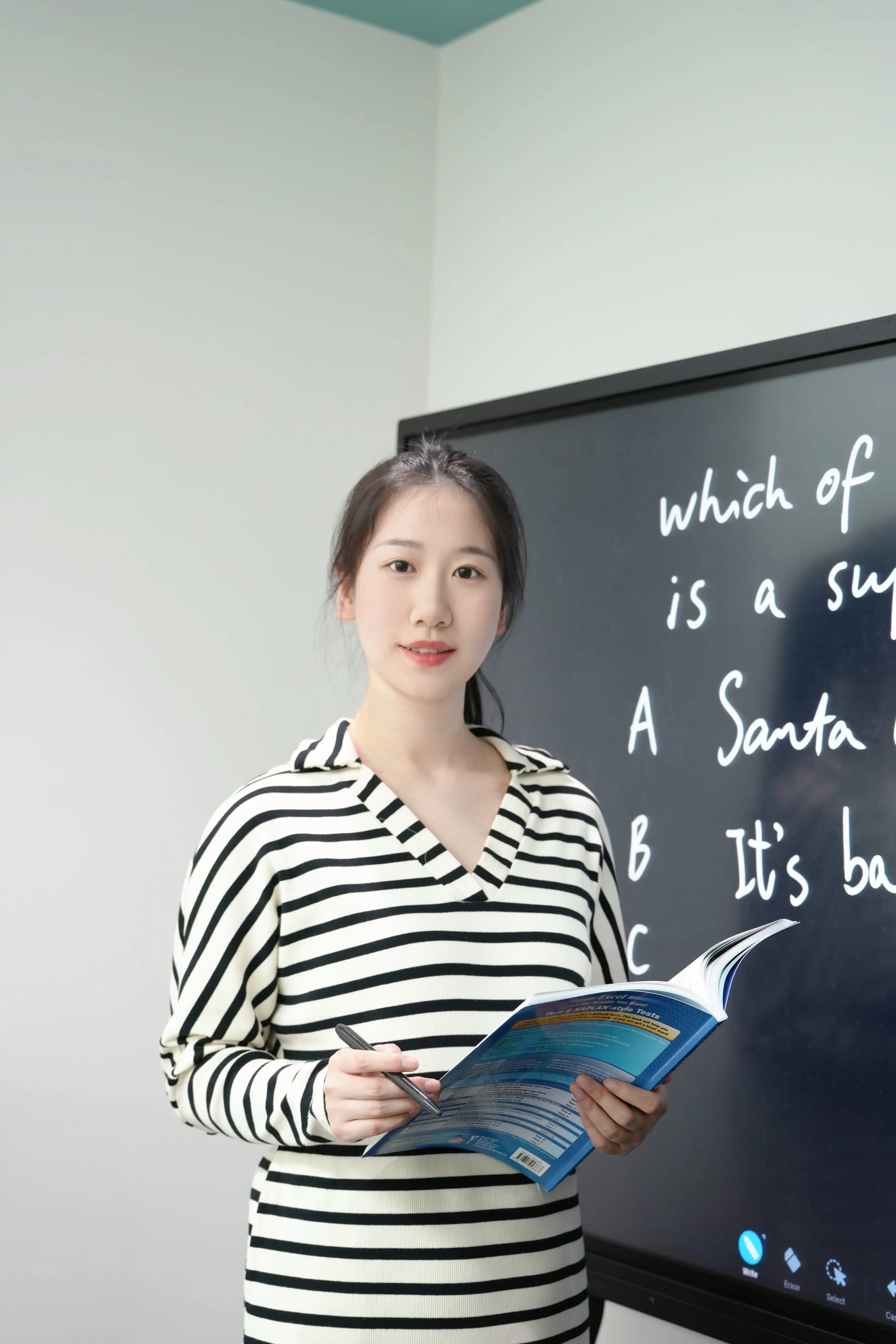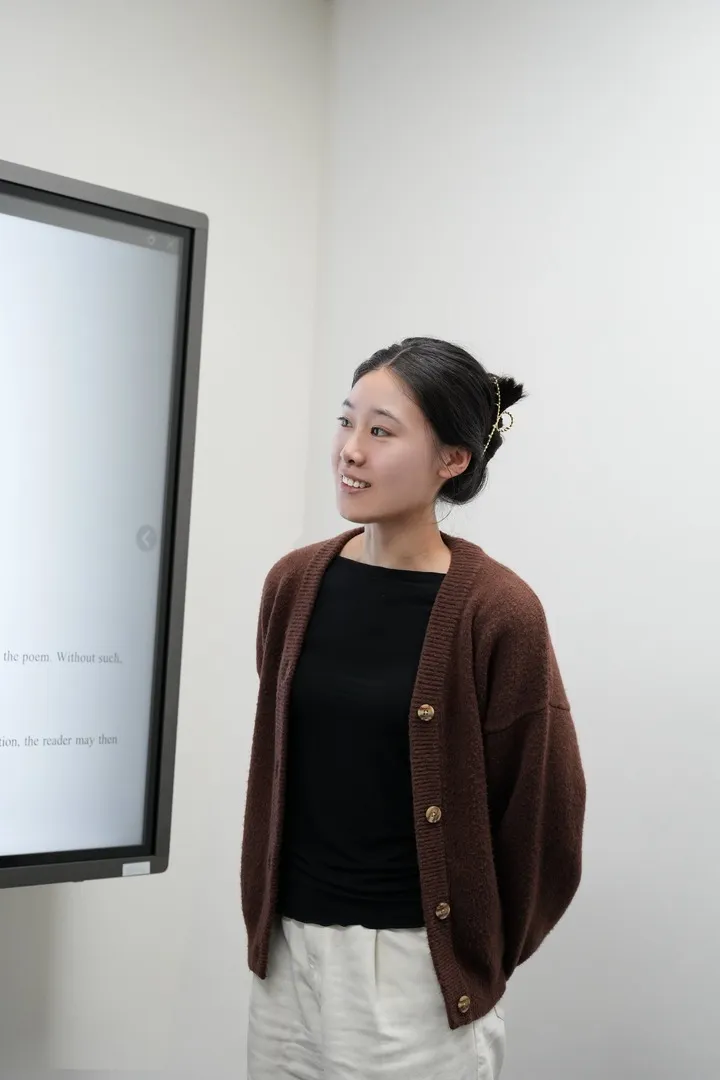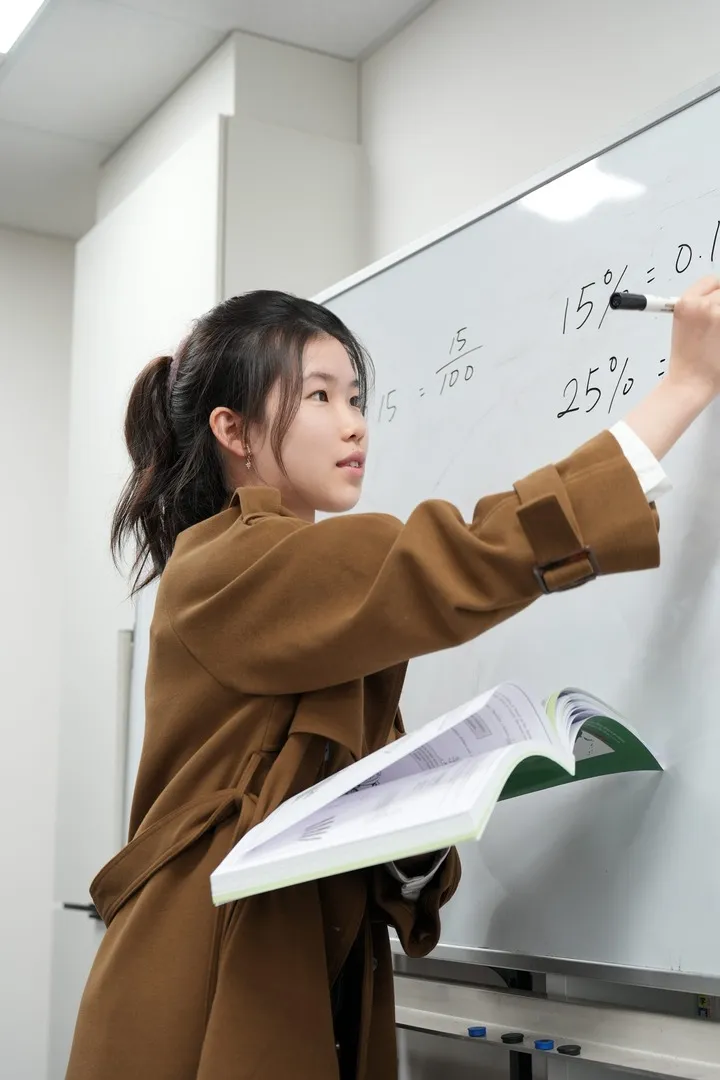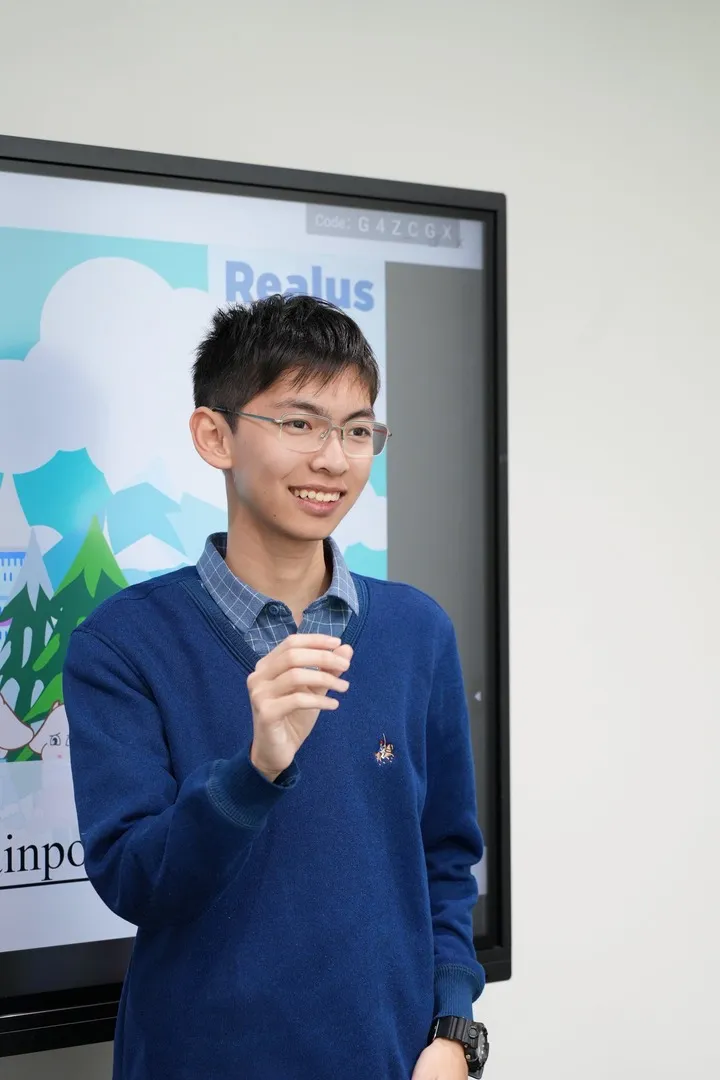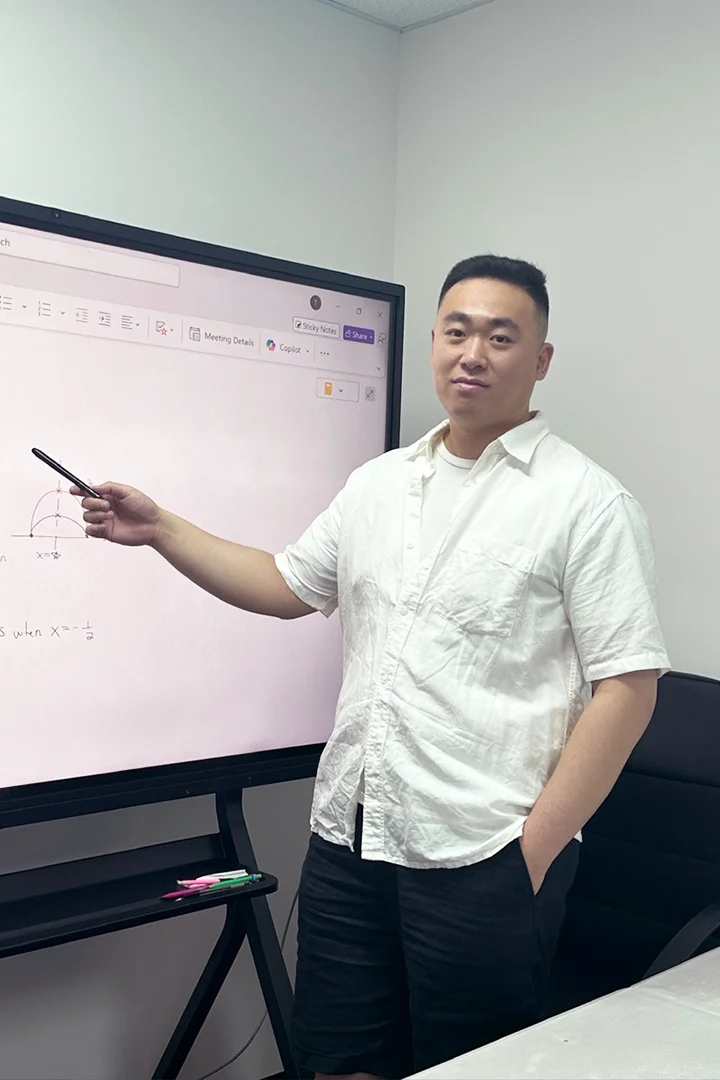
Through our unique O2O teaching model at Realus, we ensure the academic growth of students from Year 7 to Year 11, while emphasising the cultivation of independent thinking, creativity, and a lifelong learning attitude.
Upholding the principle of "learning ahead", we begin introducing VCE content in Years 9 and 10.
This approach ensures that by the end of Year 11, students have mastered all the requirements of the VCE syllabus, with appropriate extensions.

At Realus, our educational philosophy is centered on systematic instruction and effective academic improvement.
Drawing on years of experience, our research and teaching team has innovatively developed the VCE Excellence Program, which incorporates two core educational principles: "Advanced Learning" and the "Three-Cycle Review Method." We encourage students to discover the joy of learning through exploration and practice, fostering critical thinking to analyse the depth and breadth of knowledge and its application in the real world.
From Year 7 to Year 10, we ensure students' academic growth while focusing on cultivating their independent thinking, creativity, and a lifelong learning attitude. In Years 9 and 10, we begin guiding students to engage with VCE exam content.
Following the concept of "advanced learning," we introduce VCE content in Years 9 and 10. This approach ensures that by the end of Year 11, students will have mastered all the essential VCE exam content, with additional extension where necessary.
Utilising the "Three-Cycle Revision Method," we systematically review all key knowledge points in Year 12. This approach strengthens students' comprehensive application abilities, enhances exam techniques, and ensures that students can perform at their best in the final VCE exams, maximising their personal potential.
Learn: Systematic curriculum structure.
Practice: In-class practice combined with homework for reinforcement.
Test: Periodic tests to identify gaps and reinforce learning thoroughly.
Evaluate: Learning report feedback, connecting school and home.
Assist: Detailed homework analysis and an educational consultation platform.
The REALUS teaching and research team has developed scientific, rigorous, and engaging teaching materials.
The curriculum is designed with spiral knowledge arrangements, comprehensive course layouts, and progressive exercises, providing students with a complete and systematic learning experience.
Term 1
Term 2
Term 3
Term 4
Term 1
Term 2
Term 3
Term 4
Lesson 1: Sequences and Series Part I
Lesson 2: Sequences and Series Part II
Lesson 3: Proof Part I
Lesson 4: Proof Part II
Lesson 5: Logic Part I
Lesson 6: Logic Part II
Lesson 7: Algorithms
Lesson 8: Combinatorics Part I
Lesson 9: Combinatorics Part II
Lesson 10: Combinatorics Part III
*End-of-Term Exam
Lesson 1: Sequences and Series Part I
Lesson 2: Sequences and Series Part II
Lesson 3: Proof Part I
Lesson 4: Proof Part II
Lesson 5: Logic Part I
Lesson 6: Logic Part II
Lesson 7: Algorithms
Lesson 8: Combinatorics Part I
Lesson 9: Combinatorics Part II
Lesson 10: Combinatorics Part III
*End-of-Term Exam
for an Exceptional Learning Experience
Our faculty comprises outstanding teachers who are graduates from world-class universities. They design rigorous and engaging courses, continually optimising content based on advanced international curricula and exam trends.
We strive to innovate beyond the limitations of traditional education through our MarsLadder platform, offering comprehensive, interactive, and personalised learning experiences.
Realus's O2O (offline-to-online) model effectively addresses issues of passive learning and delayed feedback for teachers and parents, creating an efficient learning loop that supports students' growth in an enjoyable and effective manner.
We offer synchronised live teaching both online and offline, with class recordings available for three months for repeated study. Post-class, our intelligent learning software supports learning, practice, and assessment.
Experienced VCE Maths teachers
'3-Step Cycle' teaching model
Scientific and rigorous teaching materials
Closely aligned with the Victorian curriculum
Access to MarsLadder resources
Complementary tests and assignments
Advanced class model (small/large class)
Technology-enabled teaching
One-on-one learning tracking service
Learning report feedback
Comfortable learning environment
Proven by 10,000+ students — from the classroom to the exam room, every effort leaves a lasting result.
Engage in in-depth study of literary texts and contemporary issues, systematically strengthening skills in text response, language analysis and persuasive writing. Emphasis is placed on logical argumentation, critical thinking and depth of expression, enhancing both academic writing and oral communication to support high achievement in VCE English.
Designed for second-language learners, this course focuses on developing academic expression and advanced language analysis skills. Students receive structured training in text response, personal response and analytical writing. With attention to emotional appeal, visual text interpretation and oral presentation, the programme builds clarity of structure and precision of expression, establishing a strong foundation for advanced VCE English study.
Centred on data analysis, financial mathematics, matrices, networks and modelling. Students apply statistical tools to interpret data distributions, explore ratios, proportions and percentages in financial contexts, and use arithmetic and geometric sequences to model real-world situations. The course strengthens statistical reasoning and practical modelling skills, providing a solid applied foundation for VCE General Mathematics.
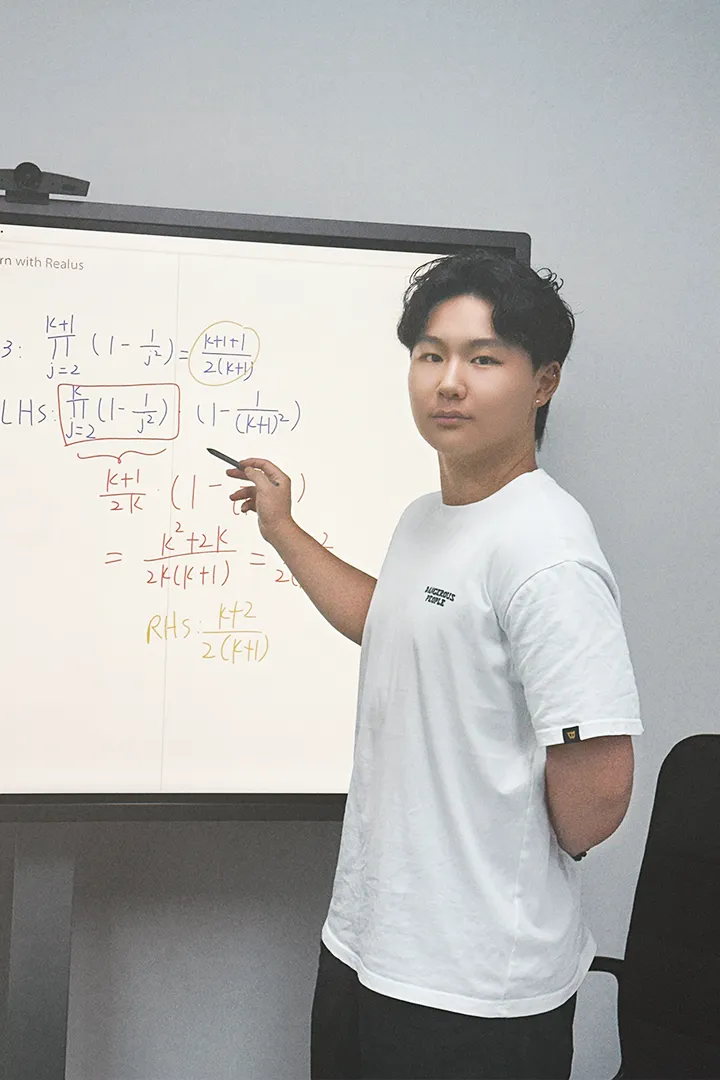
Focus on functions, exponential and logarithmic relationships, calculus, and probability and statistics. Students develop strong function modelling and graphical analysis skills, with systematic training in differentiation, integration and integrated problem-solving. The course builds mathematical reasoning and modelling capability, forming a comprehensive framework for success in VCE Mathematical Methods.
Designed for high-achieving students, this course extends learning across sequences and proof, combinatorics, matrices and graph theory, complex numbers and vectors, calculus and differential equations. Strong emphasis is placed on abstract reasoning and advanced modelling skills, enabling students to tackle complex mathematical challenges and prepare for top-level VCE performance.
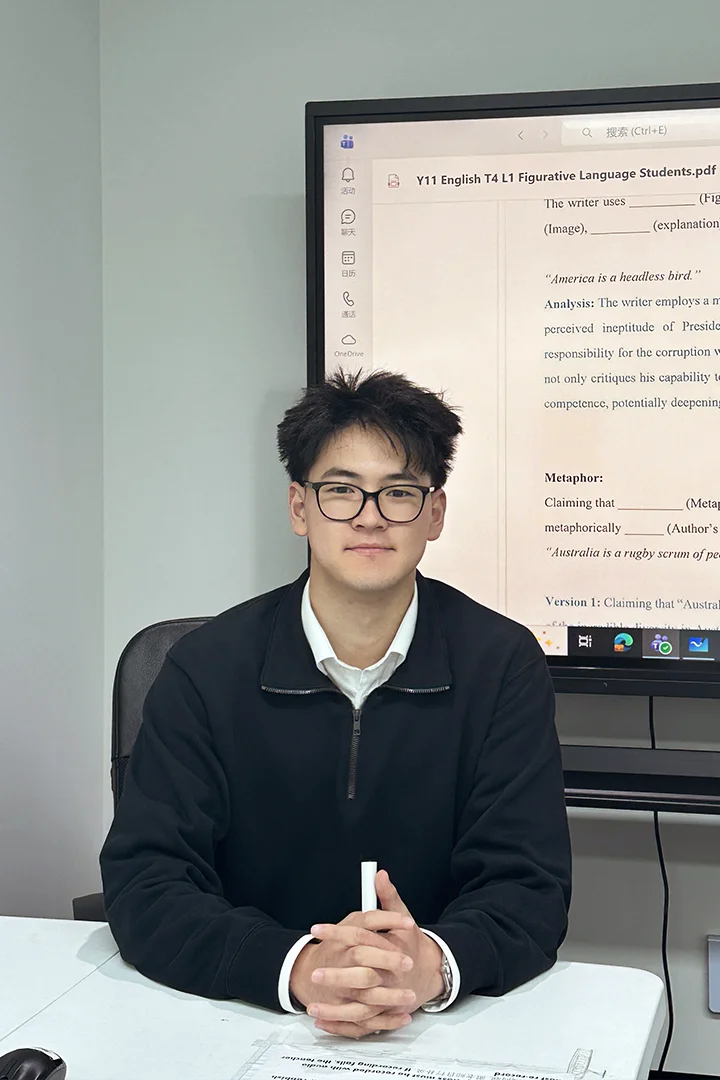
Systematic exploration of atomic structure, chemical bonding, quantitative analysis, organic reactions and electrochemical principles. Students enhance chemical calculation and experimental analysis skills while developing understanding from microscopic structure to macroscopic properties. Through rigorous theoretical study and practical application, the course prepares students thoroughly for VCE Chemistry examinations.

Comprehensive study of cell structure and function, regulatory systems, heredity and diversity, and foundational molecular biology. Students develop scientific investigation and data analysis skills, fostering biological thinking from the molecular to the systems level and building a complete knowledge framework for VCE Biology.
Study of waves, thermodynamics, electricity, mechanics and nuclear physics, with emphasis on physical modelling and quantitative analysis. Students strengthen formula derivation, graphical interpretation and experimental design skills, cultivating scientific reasoning and problem-solving abilities for advanced VCE Physics applications.